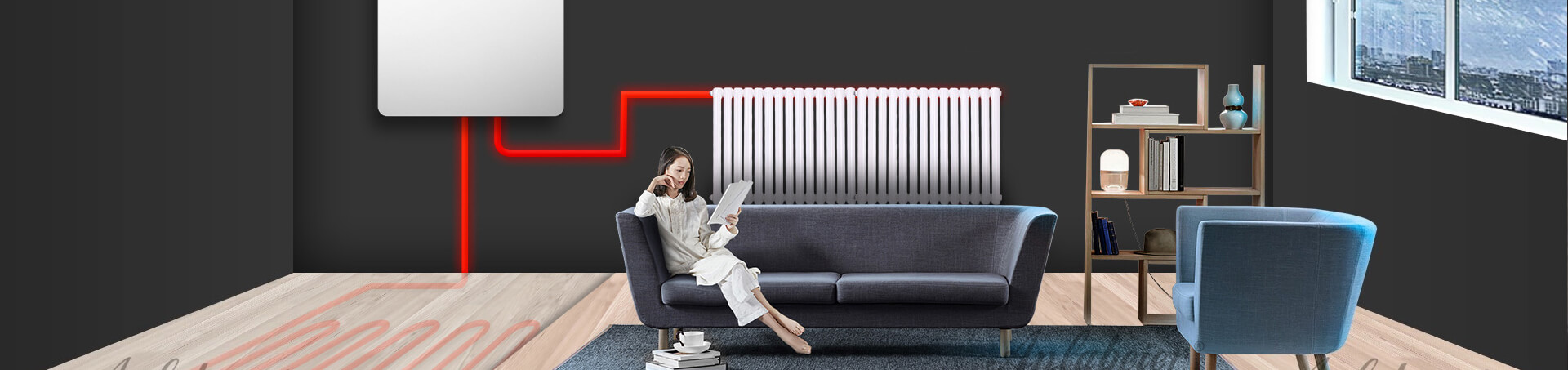
The right water heater is not the newer one. It is the one your plumbing and your fuse board can support.
Most disappointing replacements start the same way: someone buys the technology instead of matching the house. A cylinder is replaced by an on-demand unit, and the first cold morning reveals that the circuit, the flow rate or the water hardness was never checked.
Anlabeier, the instant electric water heater brand of Zhongshan Chongde Electric Co., Ltd., makes on-demand units only, so this comparison comes from a manufacturer with an interest in one side of it. The six differences below decide the answer, whichever side you end up on.
Recommendation: measure the cupboard and the wall before you compare anything else. Space decides more installations than efficiency does.
Recommendation: put the unit near the outlet it serves, and the waiting-time argument mostly disappears.
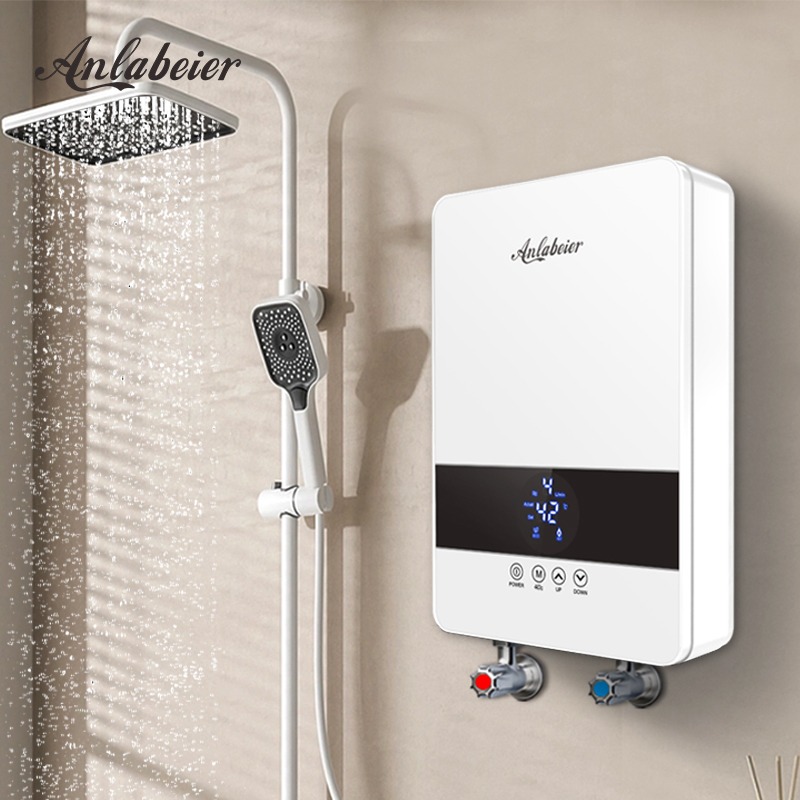
Recommendation: count simultaneous showers, not bathrooms. That number chooses the technology more often than floor area does.
Running cost is arithmetic, not a slogan, and the inputs are yours: rated power, hours of heating, and your own tariff.
Recommendation: do the sum with your own bill before you believe any running-cost claim, including a manufacturer's.
This is where most surprises live.
Recommendation: price the circuit work before the unit. The wiring is the part that cannot be argued with.
Recommendation: design for the repair, not for the brochure. Ask how the unit comes out before you ask how it goes in.
| Tankless (on demand) | Storage cylinder | |
|---|---|---|
| Space | Wall-mounted, no footprint | Cupboard or plant space, floor loading |
| First hot water | Short delay while the pipe clears | Almost immediate |
| Long use | Continues within the unit's rating | Limited by stored volume, then recovery |
| Simultaneous outlets | Depends on rated power | Handles several until the tank runs down |
| Standing loss | None between draws | Tank kept hot between draws |
| Failure | Local to the unit, quick to swap | Leak risk, longer replacement |
Pros: no stored volume, no standing loss, a small wall footprint, and supply that continues while flow stays within the rating.
Cons: a short wait at the tap, a dedicated circuit that older properties may not have, a temperature rise that falls as flow or cold-water severity increases, and scale that has to be managed in hard-water areas.
Anlabeier is the instant electric water heater brand of Zhongshan Chongde Electric Co., Ltd., a manufacturer in Zhongshan, Guangdong that has built instant electric water heaters since 2010. The range runs from 3.5 kW single-outlet to 12 kW whole-home units, with stainless steel or cast aluminium elements, ELCB leakage protection, dry-heating cutoff, overheat protection and IPX4 casings. The company holds more than 120 patents, works to CE, CB, RoHS, ETL and ISO9001 standards, and tests units at incoming inspection, temperature-control, semi-finished, finished-product and packaging stages.
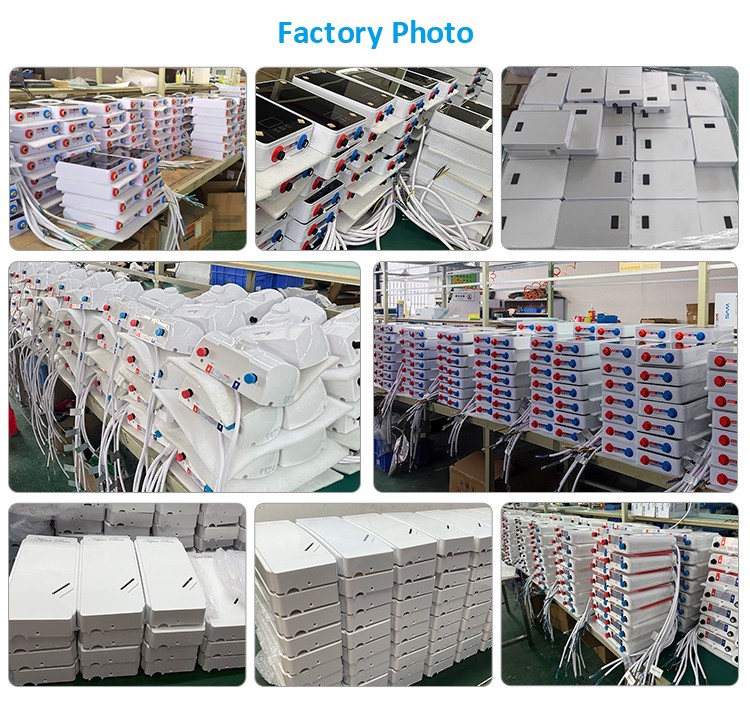
There is no winning technology here, only a fitting one. Measure the space, count simultaneous showers, check the circuit, and ask who repairs what. Anlabeier units from Zhongshan Chongde Electric Co., Ltd. cover 3.5 kW point-of-use to 12 kW whole-home.
Does a tankless water heater run out of hot water?
Not in the way a cylinder does. It heats while water flows, so the limit is the unit's rated power against the flow and the incoming water temperature, not a stored volume.
How long does a tankless water heater take to deliver hot water?
It depends on the distance from the unit to the tap and the pipework, not the heater alone. Fitting the unit close to the outlet shortens the wait.
Is tankless better than a tank?
Better at space, standing loss and continuous supply within its rating; worse at first-hot-water delay, circuit demand and scale. The house decides, not the label.



Scan to wechat


 English
 español
 हिन्दी